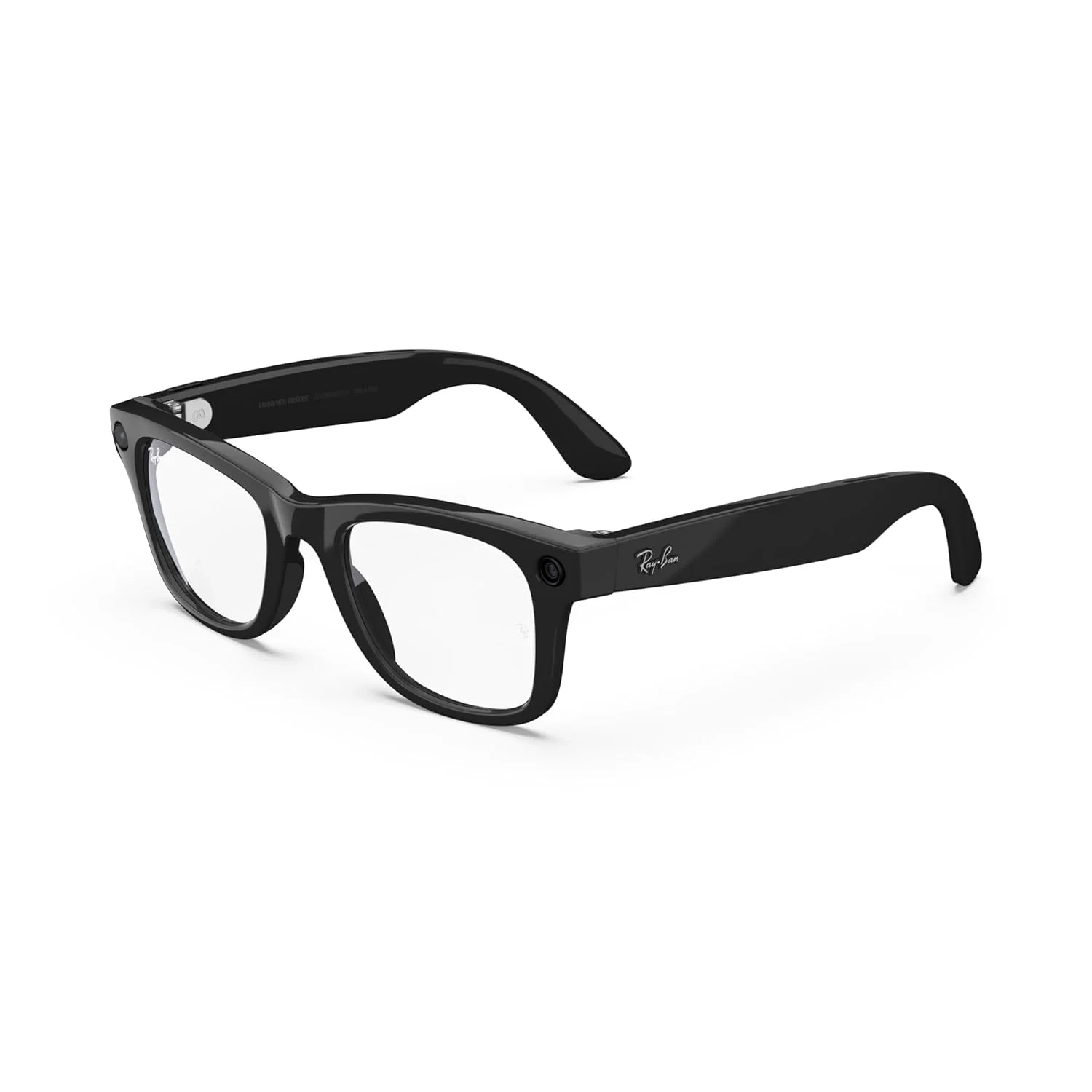
Ray-Ban Meta Smart Glasses Review: Features & Specs
This guide is for anyone considering Ray-Ban Meta smart glasses to enhance their daily routine. Many users look for a seamless way to capture moments and access information hands-free. We’ll cover the key features, ideal use cases, and help you decide if these advanced glasses are right for you.
Introduction
Smart glasses are no longer a futuristic concept; they are a practical reality enhancing daily life. The Ray-Ban Meta glasses represent a significant leap in this Wearable Technology category, merging iconic style with powerful, hands-free functionality. These AI glasses are designed to help you capture moments, access information, and stay connected without ever needing to pull out your phone.
This seamless integration of camera, audio, and artificial intelligence creates a new paradigm for personal tech. Whether you’re a content creator, a busy professional, or simply a tech enthusiast, these smart glasses offer a unique way to interact with the digital world while staying present in the physical one.
Smart Glasses Problems and Solutions
Many potential users hesitate to adopt smart glasses due to common concerns. People often worry about bulky, awkward designs that look more like a prototype than a fashion accessory. Others question the audio quality, fearing tinny speakers or complete isolation from their surroundings. Privacy is another major hurdle, with users anxious about recording or being recorded without consent.
Battery life and intuitive controls are also frequent pain points. No one wants a device that dies midday or requires a complicated app to perform basic functions. The Ray-Ban Meta glasses directly address these issues with a thoughtful design focused on user experience.
Step-by-Step Solutions
Getting the most from your smart glasses is straightforward. Follow these steps to integrate them smoothly into your routine.
First, pair the glasses with your smartphone via Bluetooth using the Meta View app. This is your central hub for managing content and settings. For capturing media, a simple tap on the temple or a voice command like “Hey Meta, take a photo” instantly captures your point of view.
To manage audio, adjust the volume with the touchpad on the right temple. The open-ear design lets you enjoy music while staying aware. For queries, press and hold the same touchpad to activate Meta AI for real-time information or translation. Finally, use the app’s privacy controls to disable the microphone or camera when desired, ensuring you remain in command.
Alternatives and Comparisons
When considering smart glasses, it’s helpful to compare the Ray-Ban Meta to other options. Dedicated action cameras, like GoPros, offer superior video stabilization for sports but lack the discreet, all-day wearable form factor. Standard Bluetooth earpieces provide audio and calling but have no visual component or camera.
Within the smart glasses niche, earlier models often prioritized function over form, resulting in a conspicuous look. The key advantage of the Ray-Ban Meta is its successful marriage of a recognizable, stylish design with multi-functional tech. It doesn’t ask you to sacrifice your look for the sake of features, making it a more viable choice for everyday wear compared to more specialized or obtrusive gadgets.
Practical Use Cases
Imagine you’re traveling and see a menu in a language you don’t understand. With a quick command, your glasses can translate the text aloud in real-time. For DIY projects or cooking, you can follow a tutorial hands-free while keeping your eyes on the task, or even livestream your progress to a friend for advice.
Content creators can capture authentic first-person footage for vlogs or social media without the barrier of a camera. In the Wearable Technology and Smart Home categories, these glasses can act as a discreet control panel, allowing you to check notifications or control smart lights without diverting your attention from your family or work.
FAQs
What are the best smart glasses for everyday use?
The Ray-Ban Meta glasses are a top contender for daily wear due to their classic Ray-Ban styling, comfortable fit, and balanced feature set. They are designed to be a subtle companion rather than an obvious piece of tech, making them socially acceptable for various settings.
How do smart glasses handle privacy?
The Ray-Ban Meta glasses have built-in privacy controls. A dedicated LED light indicates when the camera is active. You can physically disable the microphone and camera via the Meta View app, and all processing for features like Meta AI can be managed with transparency settings to address user concerns.
Are AI glasses worth it for the average person?
If you frequently find yourself wanting to capture spontaneous moments, listen to audio on-the-go, or get information without using your hands, then yes. They consolidate several device functions into one accessible, wearable format. For those less concerned with these integrated features, a standard pair of sunglasses and a smartphone may suffice.
Conclusion
The Ray-Ban Meta smart glasses successfully bridge the gap between cutting-edge technology and accessible, fashionable wearables. By solving core problems related to design, audio, and privacy, they present a compelling case for augmented reality in everyday life. Their strength lies in enabling users to capture, communicate, and explore information effortlessly, proving that the future of personal tech can be both powerful and elegantly simple.
About This Topic
Smart glasses are wearable computer glasses that add information alongside or to what the wearer sees. The Ray-Ban Meta model exemplifies this by integrating a camera, open-ear speakers, a microphone, and an AI assistant into a classic sunglasses design. This topic revolves around how this convergence of hardware and software creates a new, hands-free way to interact with digital content.
This technology benefits a wide range of users. Content creators and social media enthusiasts can capture a genuine first-person perspective. Travelers and language learners gain from real-time translation. Busy professionals and multitaskers appreciate hands-free calls and message management. Even hobbyists in categories like Cameras and Photos or Garden Tech Tools can use them to document projects without putting down their equipment.
A common misconception is that all smart glasses are clunky or provide a fully immersive augmented reality (AR) overlay. Current models like these focus more on ambient computing—subtly providing audio information and visual capture without a full digital display. Concerns about constant recording are addressed by clear physical and software privacy indicators, putting control firmly in the user’s hands. Ultimately, these devices are less about replacing your smartphone and more about complementing it by reducing the need to look down at a screen.