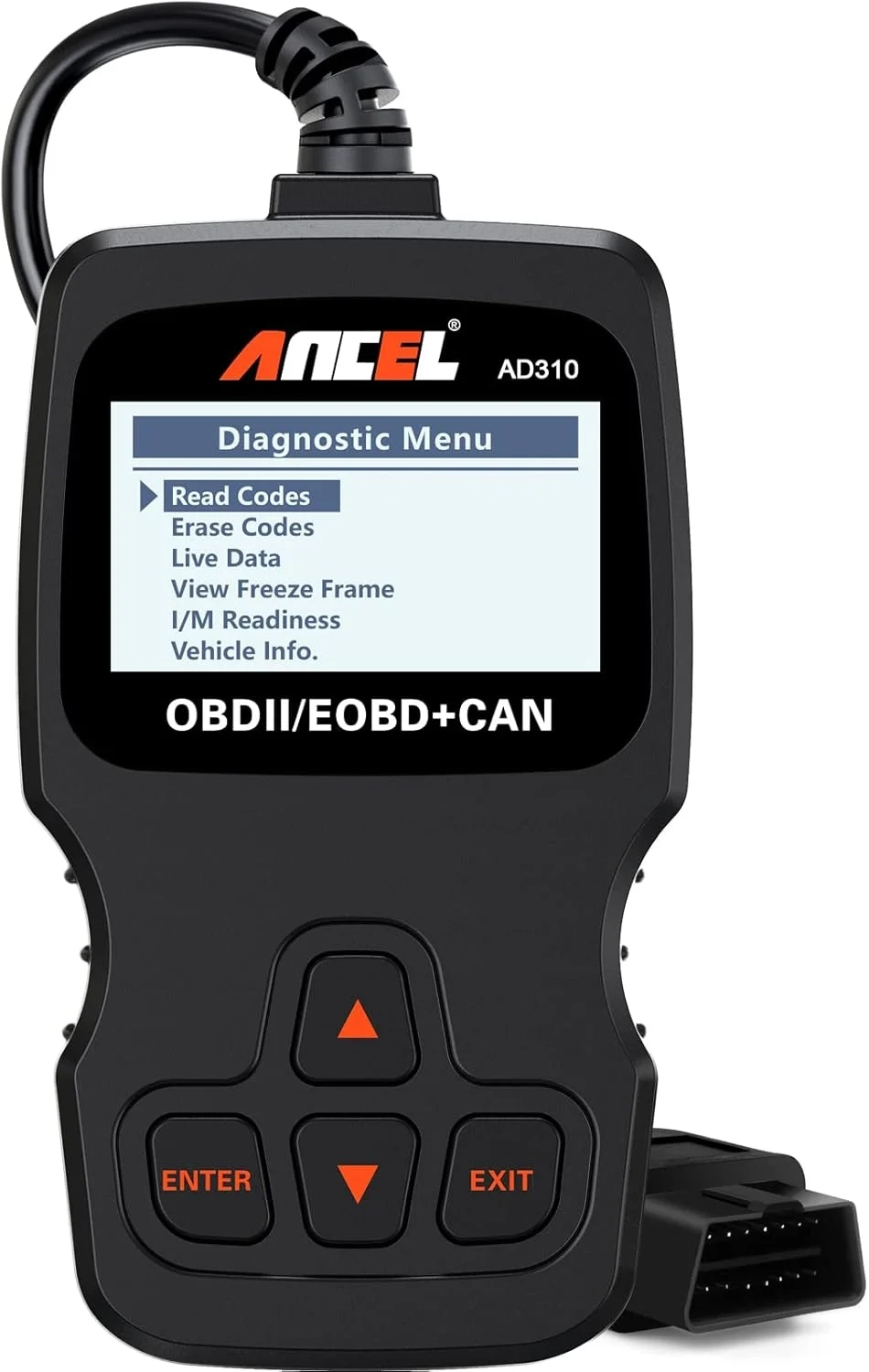
ANCEL AD310 engine code reader Guide
About This Topic
This section provides a detailed overview of OBD2 code readers, using the popular ANCEL AD310 as a primary example, to help you understand their purpose, benefits, and key limitations. An On-Board Diagnostics II (OBD2) scanner is a digital tool that plugs into your vehicle’s computer system to retrieve diagnostic trouble codes (DTCs). These codes are triggered when the vehicle’s sensors detect a problem, most commonly illuminating the check engine light. The discussion here focuses on basic, entry-level code readers designed for home mechanics and car owners, as opposed to more expensive professional scan tools.
Who This Advice Benefits
This information is most valuable for:
- DIY car owners and beginners who want to understand why their check engine light is on before visiting a mechanic.
- Anyone seeking a first code reader for basic diagnostics, reading live data streams, and clearing emission-related fault codes after a repair.
- Budget-conscious individuals needing a reliable, no-frills tool for periodic vehicle health checks.
- Drivers of older vehicles (1996 and newer in the US) looking for a simple way to perform engine light diagnostics and understand common OBD2 protocols.
Capabilities and Common Uses
A basic OBD2 scanner like the ANCEL AD310 is designed for specific, fundamental tasks. It is highly effective for:
- Reading and clearing diagnostic trouble codes related to a vehicle’s emission system, which is the most frequent cause of a check engine light.
- Providing live data (like engine RPM, coolant temperature, and vehicle speed) to monitor real-time sensor readings.
- Checking I/M monitor readiness status, which is essential for passing a state emissions test.
- Viewing freeze frame data to see the exact conditions present when a fault code was set.
- Offering a quick, preliminary diagnosis to determine if a problem is minor or requires professional attention.
Important Limitations and Misconceptions
It is crucial to understand what these entry-level tools cannot do, a common point of confusion for new users.
- Emission-Focused Only: They primarily read powertrain (P) and emission-related codes. They cannot diagnose problems in other systems like airbags (S-codes), anti-lock brakes (C-codes), or body controls (B-codes).
- Not a Professional Mechanic’s Tool: While excellent for code retrieval, they do not offer advanced functions like bidirectional controls, programming, or extensive manufacturer-specific diagnostics.
- OBDII Compatibility is Mandatory: They only work with standard OBD2 (16-pin) interfaces found in 1996 and later US vehicles. They will not work with older OBD1 systems, even with an adapter.
- A Code Reader is Not a Magic Fix: The scanner reveals the symptom (the trouble code), not the definitive repair. It points you to a system for investigation (e.g., P0420 – Catalyst System Efficiency), but further mechanical diagnosis is often required.
In summary, a basic OBD2 code reader is an authoritative first step in vehicle troubleshooting. It empowers owners to move from a vague warning light to a specific code, enabling more informed conversations with mechanics or guiding focused DIY repairs. For anyone needing to address check engine light warnings, perform pre-purchase inspections, or pass an emissions test, understanding and using such a tool is a highly practical skill.