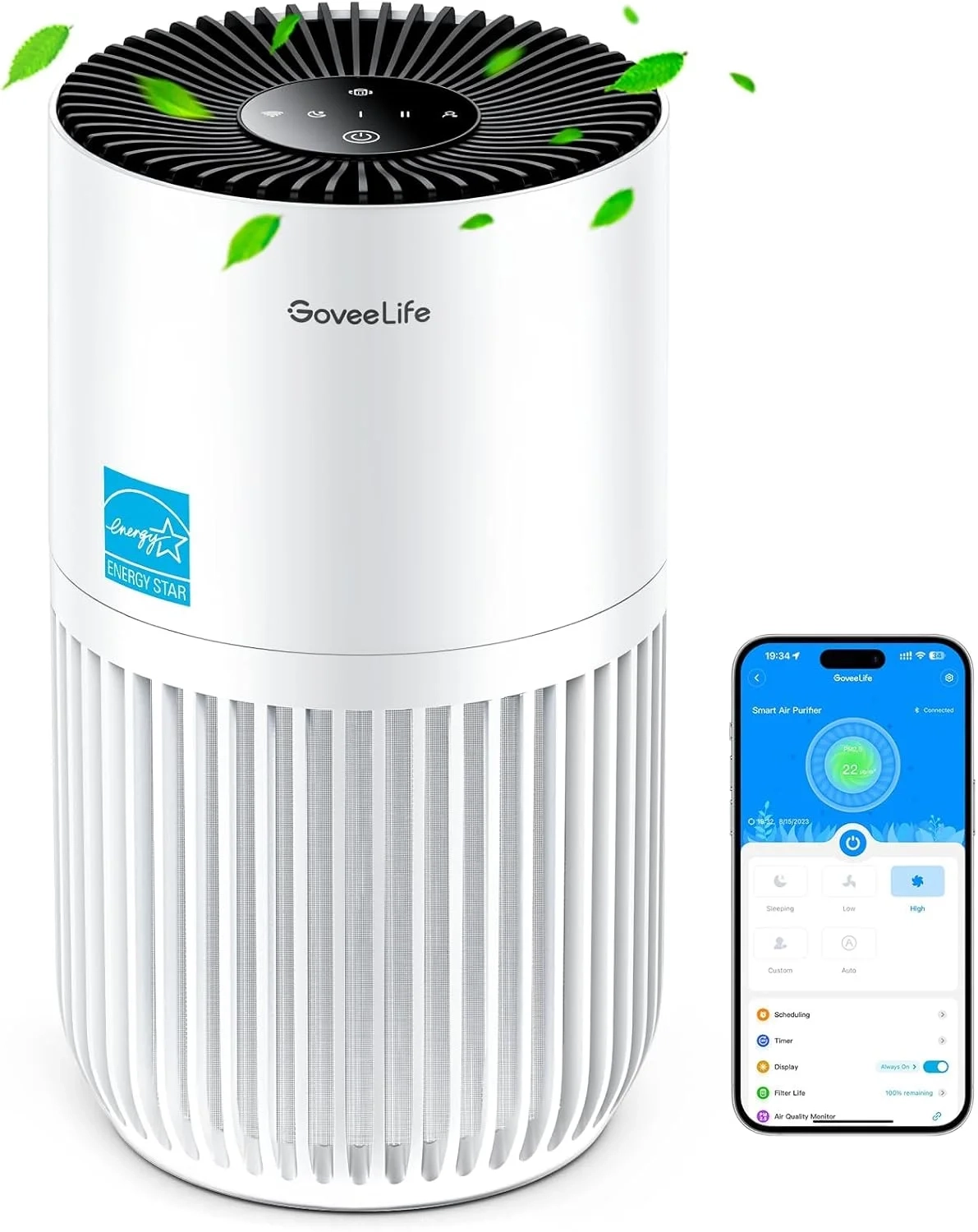
GoveeLife Mini Air Purifier for Bedroom Air Quality
Introduction
In today’s world, clean indoor air is more than a luxury; it’s a necessity for health and comfort. A smart air purifier offers a modern solution, moving beyond simple filtration to provide intelligent, automated control over your home’s air quality. These devices connect to your home network, allowing for effortless management and real-time monitoring from your smartphone or via voice commands. This article explores how a smart air purifier can transform your living space, making clean air convenient and accessible.
Smart Air Purifier Benefits and Features
Many people struggle with allergens, pet dander, dust, and odors in their homes. Traditional air purifiers require manual operation and constant guesswork about their effectiveness. Users often wonder if their device is working efficiently or when to change filters. A smart air purifier addresses these concerns by providing transparency and automation, turning air purification from a chore into a seamless part of your Smart Home ecosystem.
Step-by-Step Solutions
Integrating a smart air purifier into your life is straightforward. Follow these steps to get started:
- Unbox and Setup: Place your purifier in a central location, away from walls and large furniture for optimal airflow. Install the pre-included filter and plug the device in.
- Connect to Wi-Fi: Download the companion app (like GoveeLife) and follow the in-app instructions to connect your purifier to your 2.4GHz home Wi-Fi network.
- Configure Settings: Use the app to set schedules, create custom purification modes for different times of day, and adjust fan speeds.
- Enable Automation: For the best experience, pair your purifier with a compatible air quality monitor. This allows the device to automatically adjust its power based on real-time PM2.5 levels.
- Routine Maintenance: The app will send reminders when it’s time to replace the HEPA and carbon filters, ensuring peak performance.
Alternatives and Comparisons
When considering air purification, you have several options. Standard HEPA air purifiers are effective but lack connectivity and smart features. Larger, whole-house systems are powerful but often require professional installation and are less flexible.
A smart air purifier sits ideally between these choices. It offers the proven filtration of a HEPA system but adds the convenience of remote control, usage data, and integration with other smart home devices. Compared to a basic model, the smart features provide greater value over time through automation and maintenance alerts.
Practical Use Cases
The applications for a smart air purifier are diverse. In the bedroom, set a sleep mode for near-silent, all-night operation. For home offices, use scheduling to purify the air before and during your workday. Parents can use the app to monitor and control air quality in a nursery remotely.
Many models also include an aromatherapy function. By adding a few drops of essential oil to a dedicated pad, you can combine air purification with a calming lavender scent for relaxation or an invigorating citrus fragrance. This versatility makes it a standout product in the Smart Home category.
FAQs
What is a smart air purifier?
A smart air purifier is a connected device that removes contaminants from your air using filters like HEPA and activated carbon. Its “smart” functionality allows you to control it via an app on your phone, use voice commands with assistants like Alexa, and receive filter change notifications.
How does a smart air purifier compare to a regular one?
The core filtration is often similar. The key difference is connectivity. A smart model offers remote control, automation based on air quality sensors, usage history, and maintenance reminders. A regular purifier only offers manual controls on the device itself.
Is a smart air purifier worth it for apartment dwellers?
Absolutely. For those in apartments or smaller homes, a compact, powerful smart air purifier is ideal. It efficiently cleans the air in key rooms without taking up much space. The scheduling and quiet sleep modes are perfect for managing air quality in a controlled, smaller environment, making it a great fit for the Technology Blog audience interested in space-efficient solutions.
Conclusion
A smart air purifier represents a significant upgrade in managing indoor air quality. By combining effective filtration with intelligent features like app control, automatic operation, and maintenance alerts, it delivers convenience and peace of mind. Whether your goal is to reduce allergies, eliminate odors, or simply breathe easier, this device provides a modern, user-friendly path to a healthier home.
About This Topic
A smart air purifier is an internet-connected appliance designed to clean the air in a room by removing particles like dust, pollen, pet dander, and smoke. It goes beyond basic filtration by allowing users to monitor and control the device remotely through a smartphone application or voice commands via smart assistants.
This technology benefits a wide range of users. Homeowners and apartment dwellers seeking relief from allergies will appreciate the automated purification. Tech enthusiasts who enjoy integrating devices into a cohesive smart home ecosystem will value the connectivity. Even busy professionals benefit from the ability to manage home air quality remotely and receive timely filter replacement reminders.
Common misconceptions include the belief that these devices are overly complex or expensive. In reality, setup is typically as simple as connecting to a home Wi-Fi network, and the long-term value from automated operation and filter reminders can offset the initial cost. Another concern is noise, but most smart purifiers feature dedicated quiet or sleep modes that operate at a very low decibel level, perfect for bedrooms.
Key features that define these devices include:
- HEPA-grade filtration for capturing microscopic particles.
- Wi-Fi and app connectivity for remote control and scheduling.
- Voice control compatibility with platforms like Amazon Alexa.
- Automatic mode that adjusts fan speed based on air quality sensor data.
- Filter life monitoring that sends alerts to your phone.
Ultimately, a smart air purifier is a practical investment for anyone looking to take a proactive, data-informed approach to improving their indoor environment with minimal daily effort.